
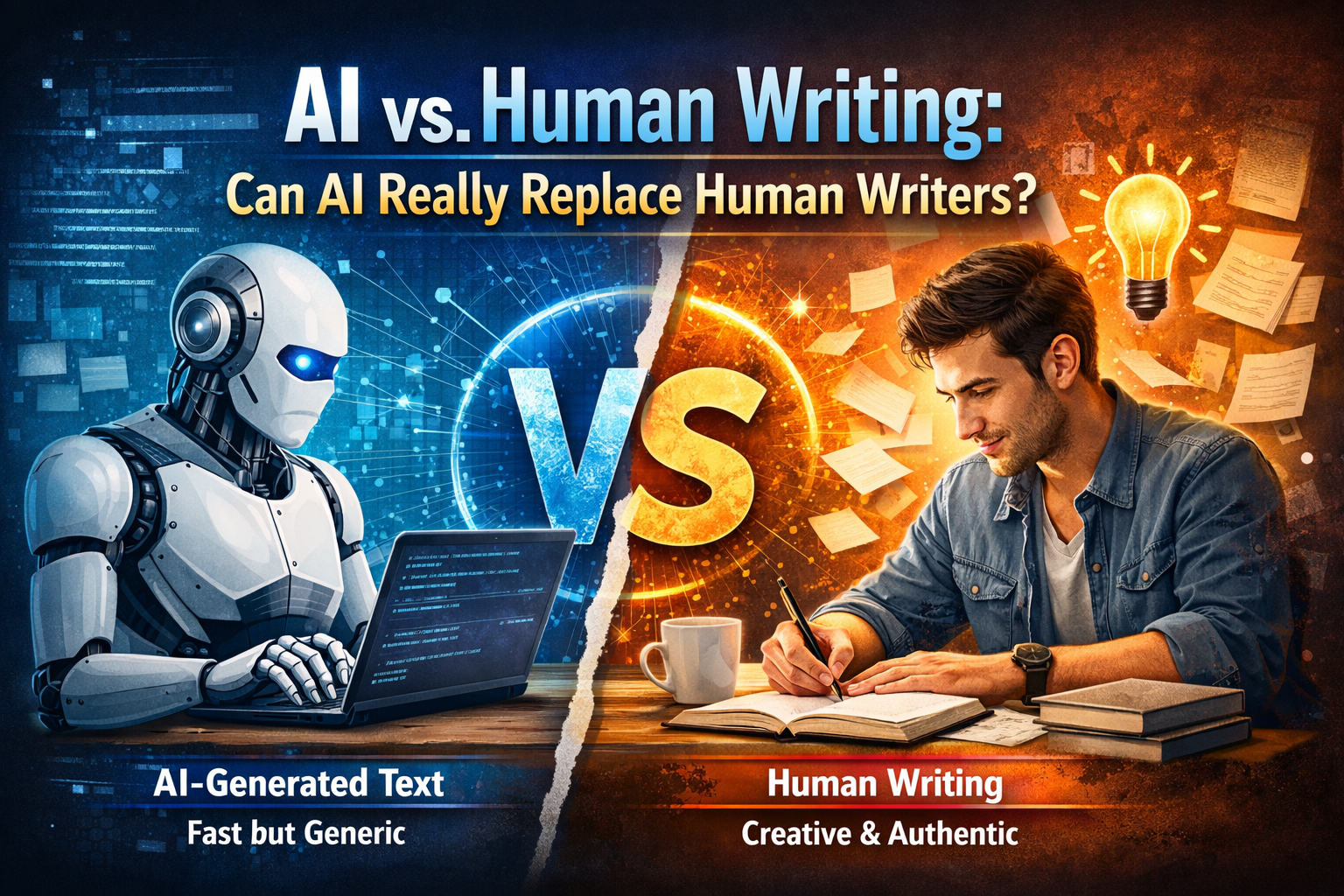
Artificial Intelligence has transformed the way content is created. From essays and articles to marketing copy and reports, AI writing tools can generate text in seconds. But as impressive as this technology is, one critical question remains: Can AI really replace human writers? In this article, we explore the key differences between AI-generated writing and human writing, and why human rewriting services are essential for producing high-quality, authentic, and engaging content. The Rise of AI Writing Tools AI writing tools use machine learning and large language models to predict and generate text based on patterns found in massive datasets. They
In recent years, the rise of artificial intelligence (AI) has revolutionized the way we produce content. From news articles to academic essays, AI-powered tools are capable of generating text with impressive speed and efficiency. However, while AI has made significant strides in natural language processing, there is still a critical role for human input—especially when it comes to writing essays. This post explores why human rewriting is essential for AI-generated essays, focusing on the limitations of AI content and the value of human expertise in making essays more natural, accurate, and engaging. 1. AI-Generated Content Lacks Emotional Intelligence and Nuance
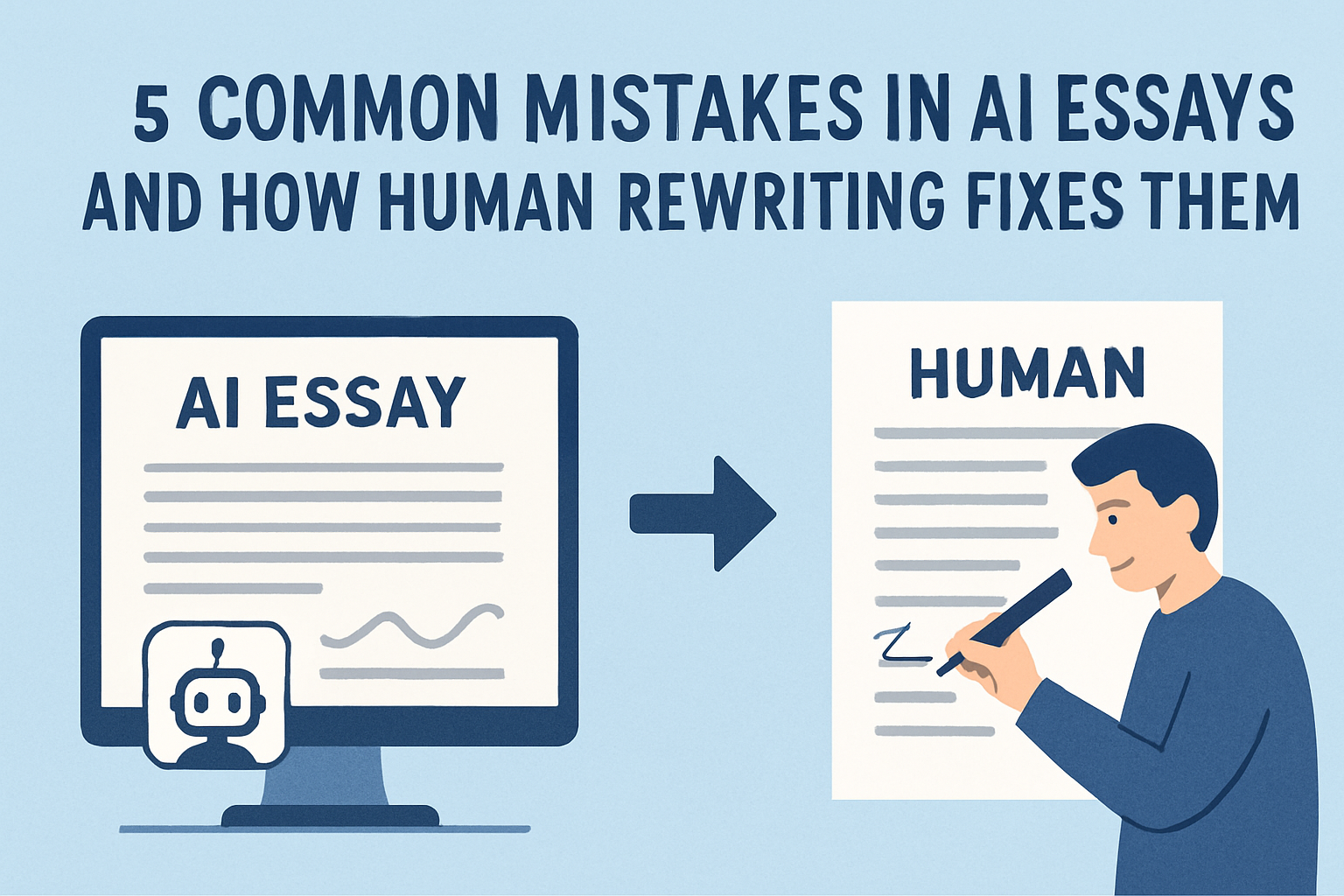
Artificial intelligence can produce essays quickly, but speed doesn’t always equal quality. While tools like ChatGPT and other AI generators are excellent at drafting ideas, they frequently produce content that sounds awkward, repetitive, or overly mechanical. For anyone who relies on AI for school assignments, blog posts, or professional writing, these mistakes can lead to unclear arguments, weak tone, and even credibility issues. That’s where a human AI rewriting service becomes essential. Human editors bring clarity, nuance, and coherence—qualities AI still struggles to deliver. Below are five common mistakes found in AI-generated essays, along with how human rewriting fixes them.
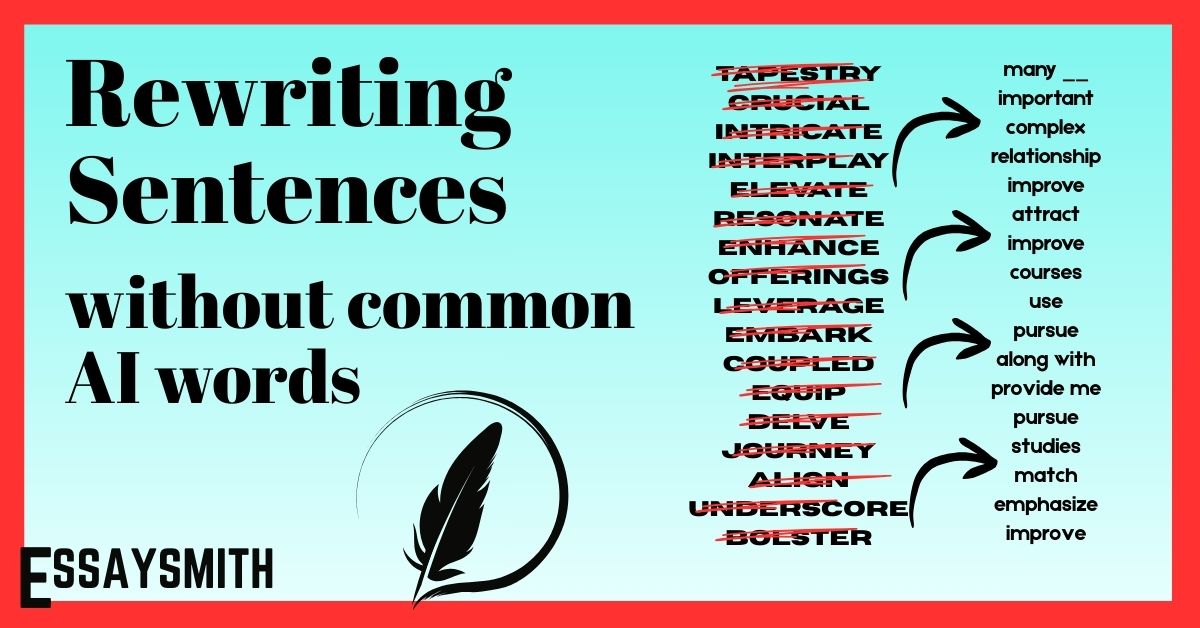
When you’ve read as many AI-generated essays as I have, you quickly get used to certain words that AI tends to prefer. Here is a short list of some of the words that I am constantly seeing in AI essays. I had AI generate sentences with these words, and I then rewrote these sentences to make them sound more natural and human. Tapestry AI-generated sentence:My career thus far has woven a diverse tapestry of roles in technology, entrepreneurship, and strategy, all of which have shaped my ambition to drive innovation in the tech industry.Human rewrite:In my career thus far, I
After years of rewriting AI essays, it has become easy to notice when an essay is written by AI. Certain words, phrases, and punctuation styles just “feel” like AI writing, and AI also tends to have a certain “voice,” which is very dry and formal, and lacks any sense of personal style. Here is an AI-generated essay (a Personal Statement for a graduate school application). In the essay, I highlighted all of the words or phrases that seem like AI: Click to enlarge Some of the highlighted words above may be fine, but with several of these words and phrases
Applying for college can be an incredibly stressful time for students and parents alike. The Common Application (or “Common App” as it’s commonly known) helps to simplify and streamline the process. Similar to the UCAS process in the UK, the Common Application makes it possible for students to apply to several schools using a single application. Although you don’t need to use the Common App—as you can also apply directly to a school using their website or paper application—the Common App makes it much easier to apply to multiple schools at once. The Common App is accepted by nearly 900
When preparing your application to university or graduate school, you may notice that some schools ask for a “Statement of Purpose”, whereas others require a “Personal Statement”. This leads everyone to inevitably type into the search bar: What’s the difference between a Statement of Purpose and a Personal Statement? Think of it like this: A Statement of Purpose is more about the Statement. A Personal Statement is more about the Personal. Statement of Purpose A Statement of Purpose (SOP) is like a CV in paragraph form. You need to start with an introduction describing why you are interested in your